
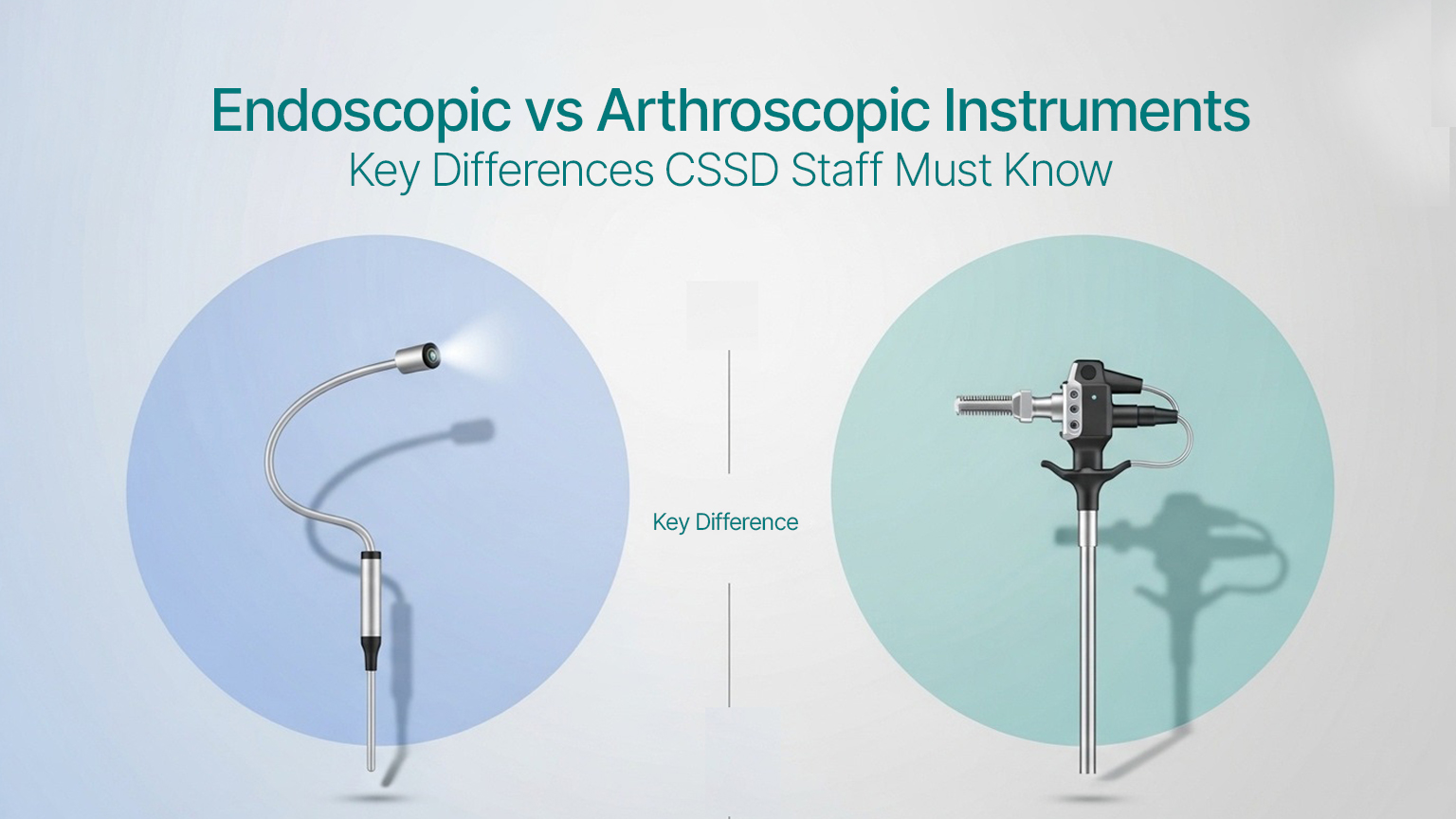
Endoscopic vs Arthroscopic Instruments: Key Differences CSSD Staff Must Know
Muhammad Danish2026-02-21T05:09:39+00:00In modern healthcare facilities, CSSD staff are responsible for proper cleaning, disinfection, and sterilization of surgical instruments. Among the most commonly confused tools are endoscopic and arthroscopic instruments.
Although both are used in minimally invasive procedures, they differ in structure, application, and reprocessing requirements. Understanding these differences is essential for infection prevention and patient safety.
What Are Endoscopic Instruments?
Endoscopic instruments are medical devices used to examine and treat internal organs through natural body openings such as the mouth, urethra, or rectum. They allow visualization of internal cavities without large surgical incisions.
An endoscope is typically a long, thin tube equipped with a camera and light source. These instruments often contain narrow internal channels that require specialized cleaning and high-level disinfection or sterilization according to manufacturer guidelines.
Key Characteristics of Endoscopic Instruments
- Used inside natural body cavities
- Can be flexible or rigid
- Contain narrow lumens or working channels
- Include fiber optic or digital imaging systems
- Require leak testing (for flexible scopes)
- Often require high-level disinfection
Because of their complex internal design, proper brushing, flushing, and drying are critical to prevent biofilm formation.
What Are Arthroscopic Instruments?
Arthroscopic instruments are used in minimally invasive joint surgeries. Unlike endoscopy, arthroscopy involves small surgical incisions to access joint spaces such as the knee, shoulder, or hip.
Arthroscopes are rigid instruments that provide visualization inside joints. They are commonly used alongside surgical tools like shavers, punches, and graspers, and usually undergo full steam sterilization after cleaning.
Key Characteristics of Arthroscopic Instruments
- Used inside joint spaces
- Mostly rigid in structure
- Inserted through small incisions
- Used for joint repair procedures
- Commonly compatible with steam sterilization
- Exposed to bone fragments and tissue debris
Ultrasonic cleaning is often recommended to remove organic material before autoclaving.
Key Differences Between Endoscopic vs Arthroscopic Instruments
The main difference between endoscopic vs arthroscopic instruments lies in their area of use. Endoscopic instruments are inserted through natural openings to examine internal organs, while arthroscopic instruments are introduced through surgical incisions to operate inside joints.
Reprocessing requirements also differ. Endoscopic instruments often require high-level disinfection and careful lumen cleaning, while arthroscopic instruments are typically cleaned thoroughly and sterilized using steam in an autoclave.
Similarities Between Endoscopic and Arthroscopic Instruments
- Both are used in minimally invasive procedures
- Both require strict CSSD reprocessing protocols
- Both may contain small channels that trap debris
- Both require careful inspection before sterilization
- Both are critical for patient safety
Despite their structural differences, proper identification and handling are essential for infection control.
Cleaning and Sterilization Considerations for CSSD Staff
Correct identification of endoscopic vs arthroscopic instruments is necessary before starting reprocessing. Each type must follow the manufacturer’s Instructions for Use (IFU) to ensure compliance and safety.
Endoscopic instruments require immediate pre-cleaning, lumen brushing, flushing, and proper drying. Arthroscopic instruments require removal of bone and tissue debris, ultrasonic cleaning when necessary, and steam sterilization in an autoclave.
Common Reprocessing Mistakes to Avoid
- Treating all scopes with the same cleaning protocol
- Skipping lumen flushing
- Ignoring drying steps
- Overloading sterilizers
- Not following manufacturer IFU
Avoiding these mistakes helps maintain instrument performance and reduces infection risk.
Conclusion
Understanding Endoscopic vs Arthroscopic Instruments is essential for every CSSD professional. While both are used in minimally invasive procedures, they differ significantly in structure, application, and sterilization methods.
Applying the correct reprocessing protocol ensures patient safety, regulatory compliance, and longer instrument lifespan.








Leave a Reply