
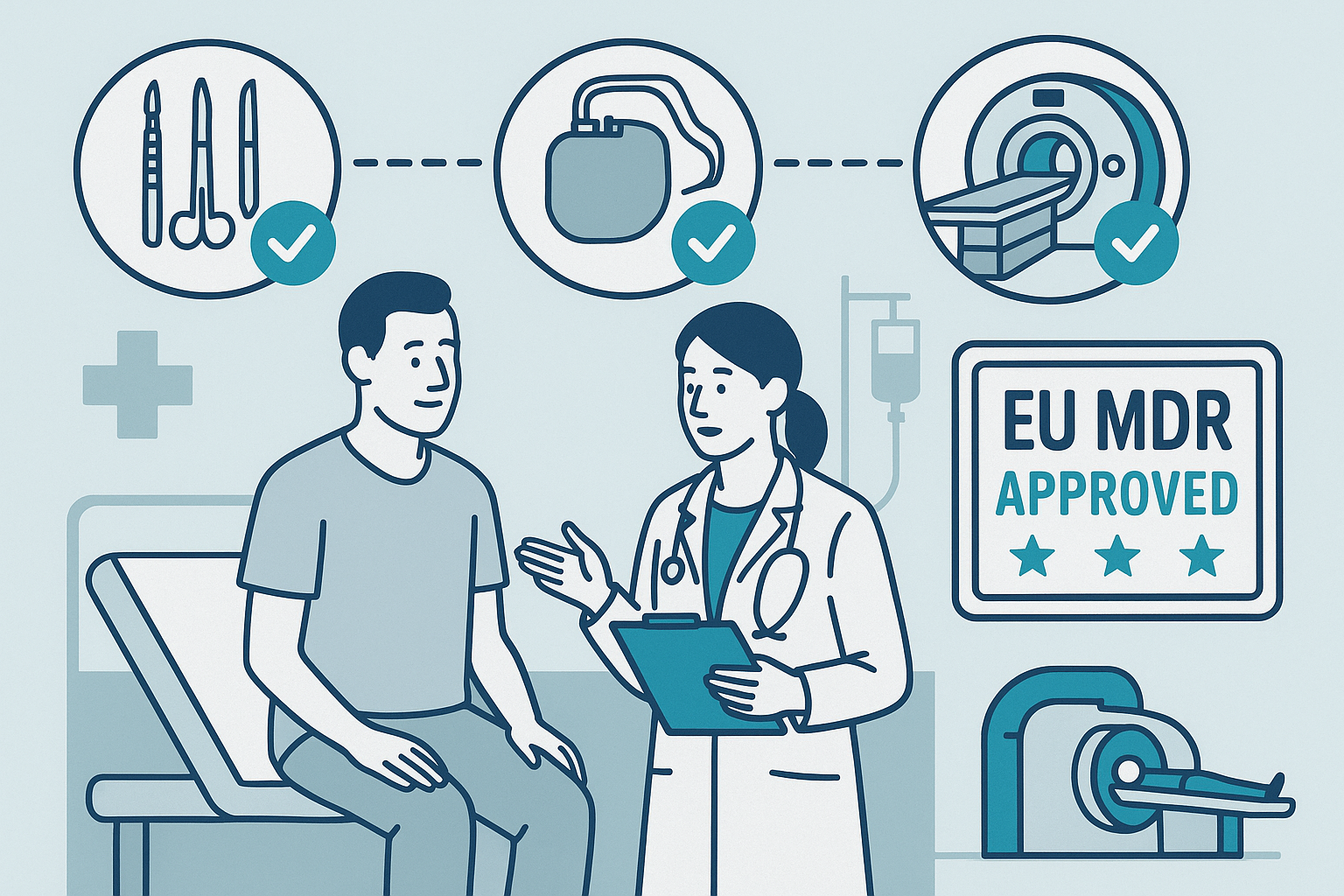
EU Medical Device Regulation (EU MDR) — What You Need to Know
Muhammad Danish2025-08-11T11:23:48+00:00EU Medical Device Regulation (EU MDR) What You Need to Know
Medical devices from surgical instruments to diagnostic tools play a critical role in healthcare. But how do you know they are safe, reliable, and effective? In Europe, that’s where the EU Medical Device Regulation (EU MDR) comes in.
The EU MDR (Regulation (EU) 2017/745) is a law that ensures all medical devices meet strict safety and performance standards before they reach hospitals, clinics, or patients.
Why EU MDR Matters for Patients
If you’ve ever had surgery, used a medical test, or worn a medical device like a pacemaker, your safety depended on strict regulations. The EU MDR protects patients by:
Ensuring product safety — Every device must be tested for risks before approval.
Maintaining high-quality standards — Devices are checked for consistent performance over time.
Requiring clear information — Labels and instructions must be easy to understand.
Enforcing post-market surveillance — Manufacturers must monitor device safety even after release.
EU MDR Quick Facts
| Fact | Details |
|---|---|
| Law Name | Regulation (EU) 2017/745 |
| In Force Since | 26 May 2021 |
| Goal | Enhance patient safety and maintain high device quality |
| Key Feature | Stricter requirements for testing, tracking, and reporting of medical devices |
| Covers | All medical devices marketed or sold within the European Union |
Key Changes Under the EU MDR
The MDR replaced the older Medical Device Directive (MDD) and introduced stronger protections:
Stricter clinical evaluations — Devices need solid scientific evidence of safety and performance.
Unique Device Identification (UDI) — Makes it easier to track and recall faulty devices.
Transparency for patients — The EUDAMED database allows access to safety data and certificates.
Extended scope — More types of devices (including cosmetic ones with medical risks) are covered.
What This Means for You as a Patient
When a device is MDR-compliant, you can trust that:
It’s been tested against the highest safety benchmarks.
You have clear instructions for safe use.
There’s a way to trace and replace it if something goes wrong.
This builds trust between patients, healthcare providers, and device makers — and ensures peace of mind when your health is on the line.
Conclusion
The EU Medical Device Regulation is more than just a law. It’s your guarantee that the medical devices you rely on are safe, effective, and monitored even after they’re on the market.





Leave a Reply