
Why Water Quality Is Critical for Steam Autoclaves
Water is the heart of every steam autoclave. The quality of water directly affects the quality of steam, and without pure water, proper sterilization is not possible. Even small impurities can weaken steam, damage instruments, and shorten the life of your sterilization equipment. That is why hospitals, clinics, and CSSDs must understand how clean water supports safe and reliable sterilization cycles.
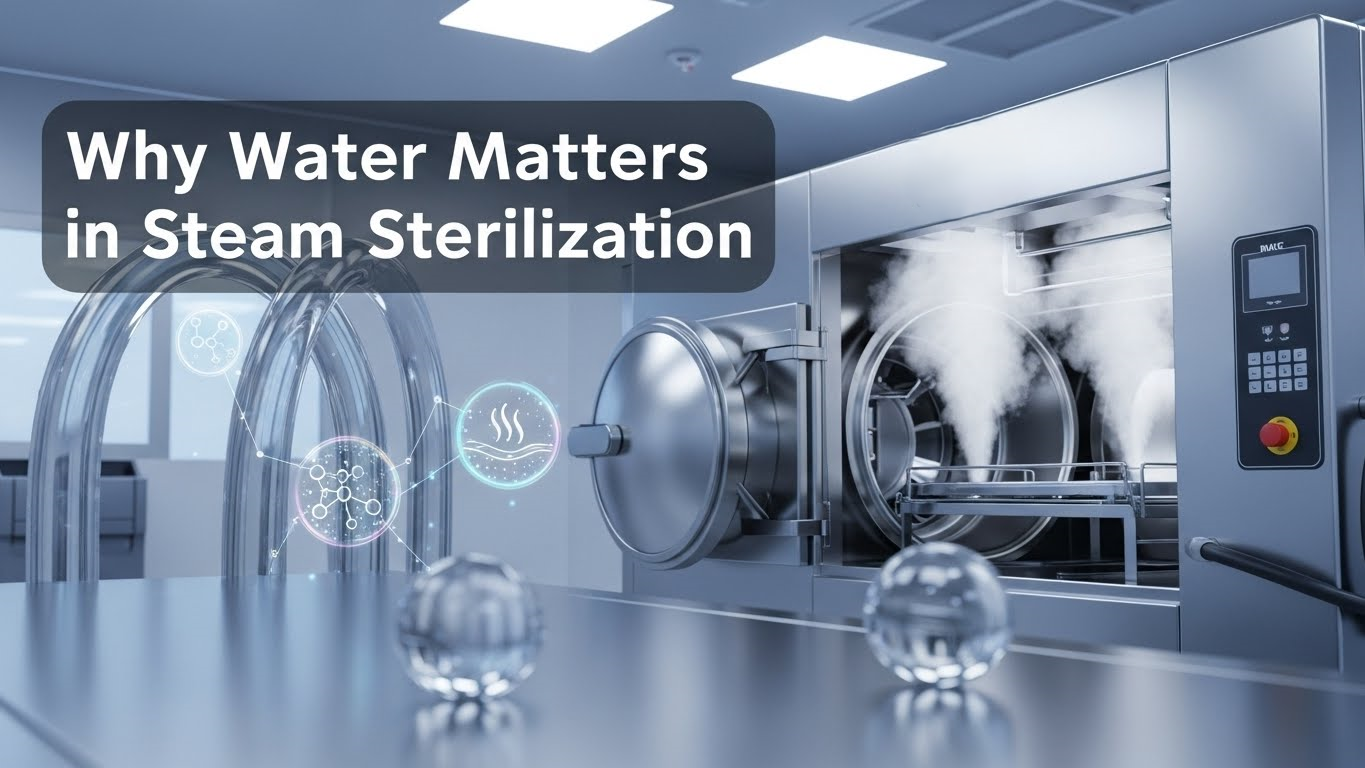
Why Water Quality Matters in Steam Sterilization
Autoclaves use saturated steam to kill bacteria, viruses, and spores. For this process to work, the steam must enter every surface of the items inside the chamber, including the inner layers of wrapped surgical packs. If the water is not pure, the steam becomes contaminated and weakens the sterilization cycle.
- Poor-quality water can lead to:
- Stains on stainless steel instruments
- Corrosion and pitting
- Reduced sterilization effectiveness
- Damage inside the autoclave chamber
This is why hospitals and CSSDs must use the correct water type for safe, consistent steam sterilization.
How Poor Water Quality Damages Stainless Steel Instruments
Stainless steel instruments are strong, but they react quickly to poor water conditions. Impure water causes corrosion, staining, and pitting, which slowly reduces the life of surgical tools. Continuous exposure to bad steam makes instruments look dull, spotted, or rusty, and many marks become permanent.
Why Tap Water Cannot Be Used in an Autoclave
Tap water may be safe for drinking, but it is not suitable for autoclaves. It contains minerals, salts, and dissolved metals that become aggressive when heated. As the water boils, these elements settle inside the steam generator and begin forming scale. Over time, this reduces heating efficiency and leads to system breakdowns.
What Makes Water “Hard”?
Water becomes hard when it contains high levels of dissolved minerals like calcium and magnesium. Hard water leaves white spots, chalky stains, and brown marks on instruments and chamber walls. Many facilities first notice these spots after only a few cycles, which is a clear warning that the water treatment system needs improvement.
How Bad Water Damages the Autoclave
Autoclaves face long-term internal damage when poor-quality water is used. Scale begins forming on the heating elements and generator surfaces, making the autoclave work harder and longer to create steam. In severe cases, heaters and sensors fail because of heavy mineral deposits. This leads to frequent downtime and costly repairs.
Water Contaminants That Cause the Most Damage
Some contaminants are especially harmful to both steam and instruments. The most damaging ones include:
- Excess minerals such as calcium and magnesium
- Metals like iron and manganese that stain stainless steel
- Particles that block valves and settle on instruments
- Chlorides that corrode surfaces and weaken steam quality
These contaminants affect steam purity and reduce sterilization reliability.
Recommended Water Treatment Solutions
Different autoclaves need different water systems depending on the material of their boilers.
For Carbon Steel Boilers
Recommended systems:
- Reverse Osmosis (RO)
- Water Softener (only for hardness issues)
RO removes dissolved minerals and solids but does not eliminate bacteria.
For Stainless Steel Boilers
Recommended systems:
- Deionized (DI) Water
- Distilled Water
DI water removes ions and provides very high purity.
Distilled water removes nearly all impurities and is ideal for stainless steel devices.
If Your Autoclave Already Shows Damage
If your autoclave is already showing signs of scale or staining, you may need to take corrective steps. Typical solutions include:
- Performing a generator blow-down to remove light mineral deposits
- Installing an RO or DI system to improve water purity
- Replacing the autoclave if scale buildup is too heavy to repair
Acting early prevents long-term damage and reduces repair costs.
The Importance of a Good Water Treatment System
A reliable water treatment system protects the autoclave, improves steam purity, and reduces maintenance issues. It also ensures that instruments remain clean, shiny, and safe for use. Investing in proper water treatment is one of the most effective ways to extend the life of your sterilization equipment.
Final Thoughts
The quality of your water controls the quality of your sterilization. Poor water leads to steam problems, instrument damage, and system failures. A proper water treatment system helps you maintain safe, effective, and consistent sterilization cycles.


Leave a Reply