
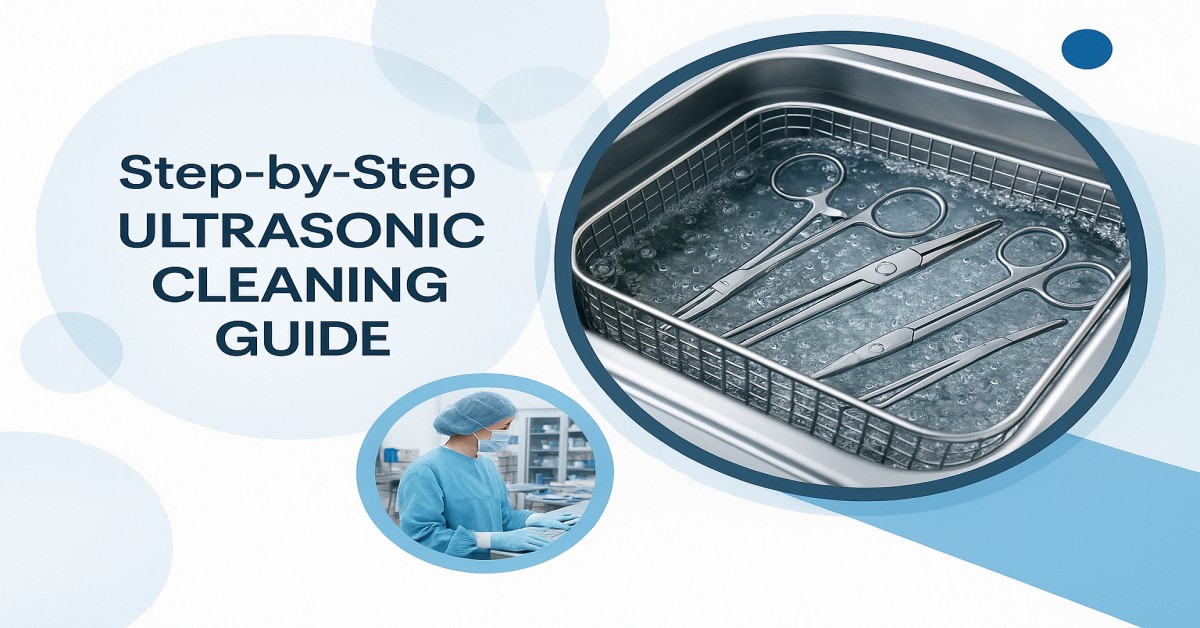
Step-by-Step Guide to Ultrasonic Cleaning of Medical Devices
Muhammad Danish2025-11-03T11:29:09+00:00Cleaning medical devices the right way is very important for patient safety. Ultrasonic cleaning is a smart method used in sterile processing departments (SPD) to remove dirt, blood, and other particles from surgical instruments and medical tools. In this guide, we explain what ultrasonic cleaning is, why it matters, the step-by-step process, and how to check quality.
What Is Ultrasonic Cleaning?
Ultrasonic cleaning is a method used to clean medical devices. It uses high-frequency sound waves in a liquid solution. These sound waves create tiny bubbles that scrub away dirt, blood, and other residues. The process is quick, gentle, and very effective for hard-to-reach areas.
Why Ultrasonic Cleaning Is Essential
Proper cleaning is essential because it:
Removes hidden debris that could cause infections.
Prepares instruments for sterilization, ensuring sterilizers work effectively.
Protects delicate instruments from damage caused by manual scrubbing.
Improves efficiency in busy healthcare settings.
How Ultrasonic Cleaners Work
Ultrasonic cleaners use electricity to make sound waves. The waves pass through a liquid solution and form bubbles. These bubbles burst with strong force. The bursting action removes dirt, grease, and biological material from the device surface. The process is safe for delicate instruments like surgical tools.
Steps for Ultrasonic Cleaning
Pre-rinse – Rinse the devices under running water to remove loose dirt.
Load the cleaner – Place the devices in a basket. Do not let them touch each other.
Add solution – Fill the cleaner with water and cleaning solution as directed.
Start cleaning – Run the ultrasonic cleaner for the required time, usually 5–10 minutes.
Rinse again – Remove the devices and rinse them with clean water.
Dry and inspect – Dry the devices carefully and check for any remaining dirt.
Quality Control in Ultrasonic Cleaning
Perform daily maintenance, including solution changes and degassing.
Use ultrasonic indicators to verify cleaning cycles.
Conduct residual protein tests to detect leftover contaminants.
Maintain records for audits and regulatory compliance.
Following these steps ensures medical devices are safe, clean, and ready for sterilization.
Conclusion
Ultrasonic cleaning is one of the best ways to prepare medical devices for sterilization. It removes hidden dirt, protects patients, and extends the life of medical tools. With proper steps and quality control, healthcare facilities can keep devices safe and ready for use.




Leave a Reply