
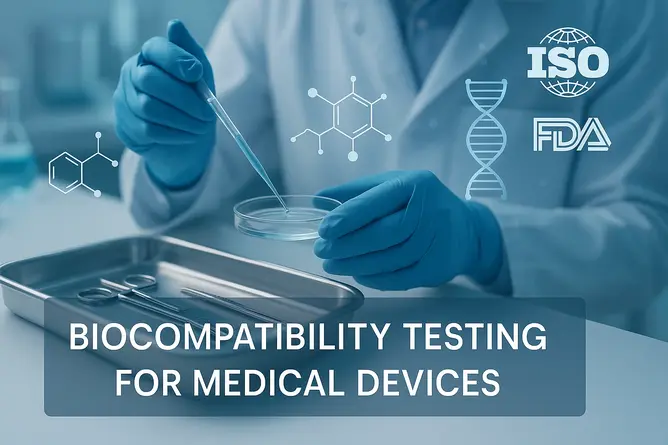
Biocompatibility Testing for Medical Devices
Muhammad Danish2025-08-20T07:33:34+00:00When medical devices are used on patients, they must be proven safe. This safety check is done through biocompatibility testing, which ensures that device materials will not harm the body.
Biocompatibility testing is a key step in medical device development, and it is required by both ISO 10993 standards and FDA requirements.
What is Biocompatibility Testing?
Biocompatibility testing is the process of checking if the materials in a medical device are safe when they touch the human body.
This testing looks at how a device material affects:
Cells – does it cause damage (cytotoxicity)?
Tissues – does it cause irritation or swelling?
Blood – is it safe in contact with blood (hemocompatibility)?
If a device fails these tests, it cannot be approved for use.
Why Biocompatibility Testing is Important
The main goal of biocompatibility testing is patient safety. Without it, devices may cause:
Allergic reactions
Inflammation
Toxic effects inside the body
By doing proper device testing, manufacturers can:
Protect patients
Prove product quality
Meet international rules and regulations
ISO 10993 Standards
The ISO 10993 standard is the global guide for biocompatibility testing. It explains how to test devices based on where and how they are used in the body.
For example:
A device touching only the skin → irritation and sensitization tests
A device used in blood → hemocompatibility tests
An implant used long-term → more advanced tests for toxicity and safety
Following ISO 10993 helps companies show that their medical devices are reliable and safe worldwide.
FDA Requirements in the USA
In the United States, the FDA requirements make biocompatibility testing mandatory. Before a new device can be sold, it must pass FDA’s safety checks.
The FDA often asks for proof that the device meets ISO 10993 guidelines. This ensures that only safe and tested products reach hospitals and patients.
Types of Biocompatibility Device Testing
Some common device testing methods include:
Cytotoxicity – Does the material damage living cells?
Sensitization – Does it cause allergies?
Irritation – Does it cause redness or swelling?
Hemocompatibility – Is it safe in blood contact?
Systemic Toxicity – Does it harm the whole body over time?
These tests make sure that every device — from surgical baskets to implants — is safe for patients.
How Manufacturers Prepare for Biocompatibility Testing
Preparing for biocompatibility testing takes planning and attention to detail. Manufacturers usually follow these steps:
Material Selection – Choose safe, high-quality materials such as stainless steel or biocompatible plastics.
Risk Assessment – Study how the device will contact the body (skin, blood, or long-term implant).
Pre-Testing Research – Review scientific data on the chosen materials to see if they have already been tested for safety.
Sample Preparation – Prepare device samples in the same way they will be used in real hospitals or surgeries.
Work with a Certified Lab – Partner with ISO 10993 and FDA-approved labs for testing.
Documentation – Record all results carefully, because regulators like the FDA require detailed reports before approval.
By following these steps, manufacturers reduce risks, avoid costly delays, and ensure their medical devices pass testing the first time.
Conclusion
Biocompatibility testing is not just a regulation — it is essential for patient health. By following ISO 10993 and meeting FDA requirements, manufacturers can create medical devices that are safe, trusted, and effective.
Proper device testing ensures that healthcare providers can use these tools with confidence, protecting patients and improving care.
✅ FAQ Section
Q1: What is ISO 10993?
ISO 10993 is the international standard that explains how to test the biological safety of medical devices.
Q2: Why does the FDA require biocompatibility testing?
The FDA requires testing to ensure devices are safe before they reach hospitals and patients.
Q3: Do all medical devices need biocompatibility testing?
Yes. Any device that touches the body, even for a short time, must pass safety tests.
Q4: How do manufacturers prepare for testing?
They select safe materials, assess risks, prepare samples, and send them to certified labs for testing under ISO 10993.






Leave a Reply