
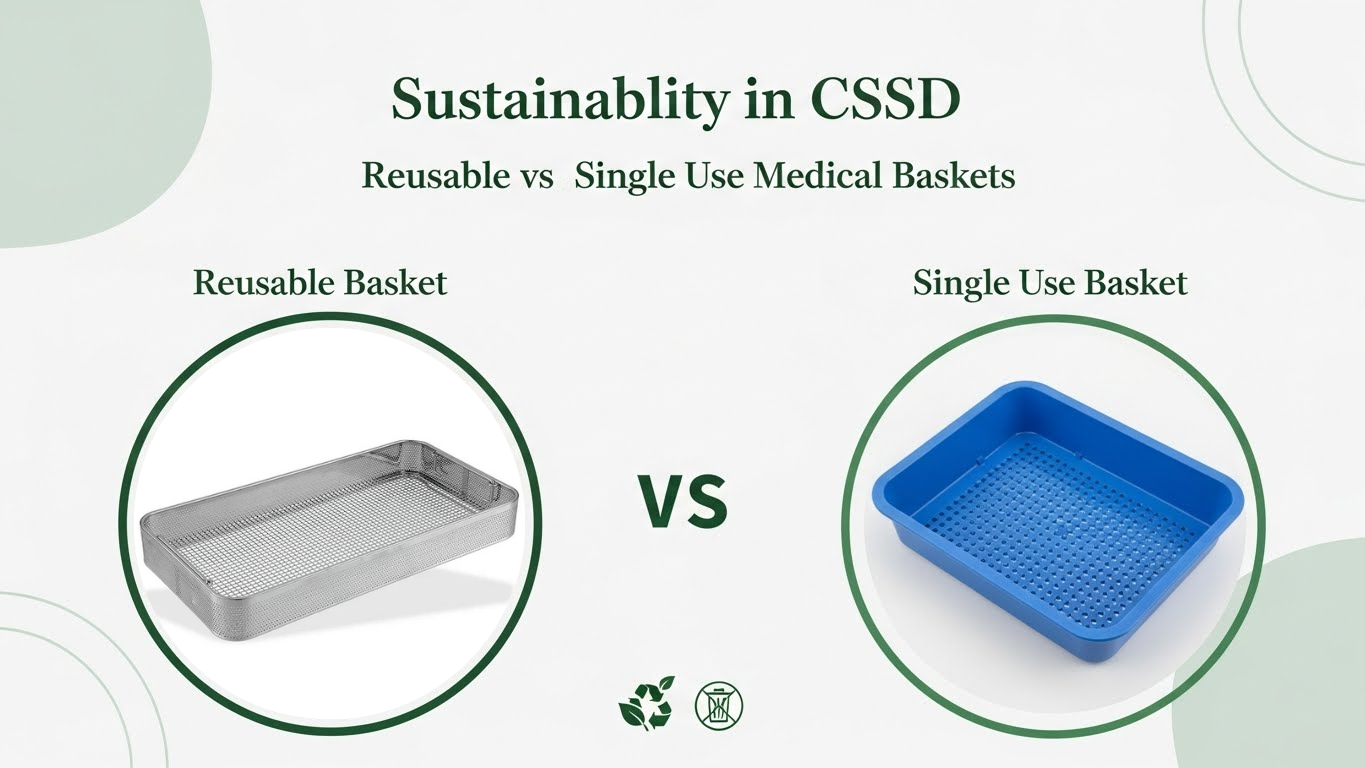
Sustainability in CSSD: Reusable vs Single-Use Medical Baskets
In modern hospitals, sustainability is becoming a key focus alongside patient safety. Central Sterile Supply Departments (CSSD) rely heavily on medical baskets to transport and sterilize instruments. Choosing between reusable and single-use medical baskets not only affects costs and efficiency but also has a direct impact on the environment.
What Are Reusable Medical Baskets?
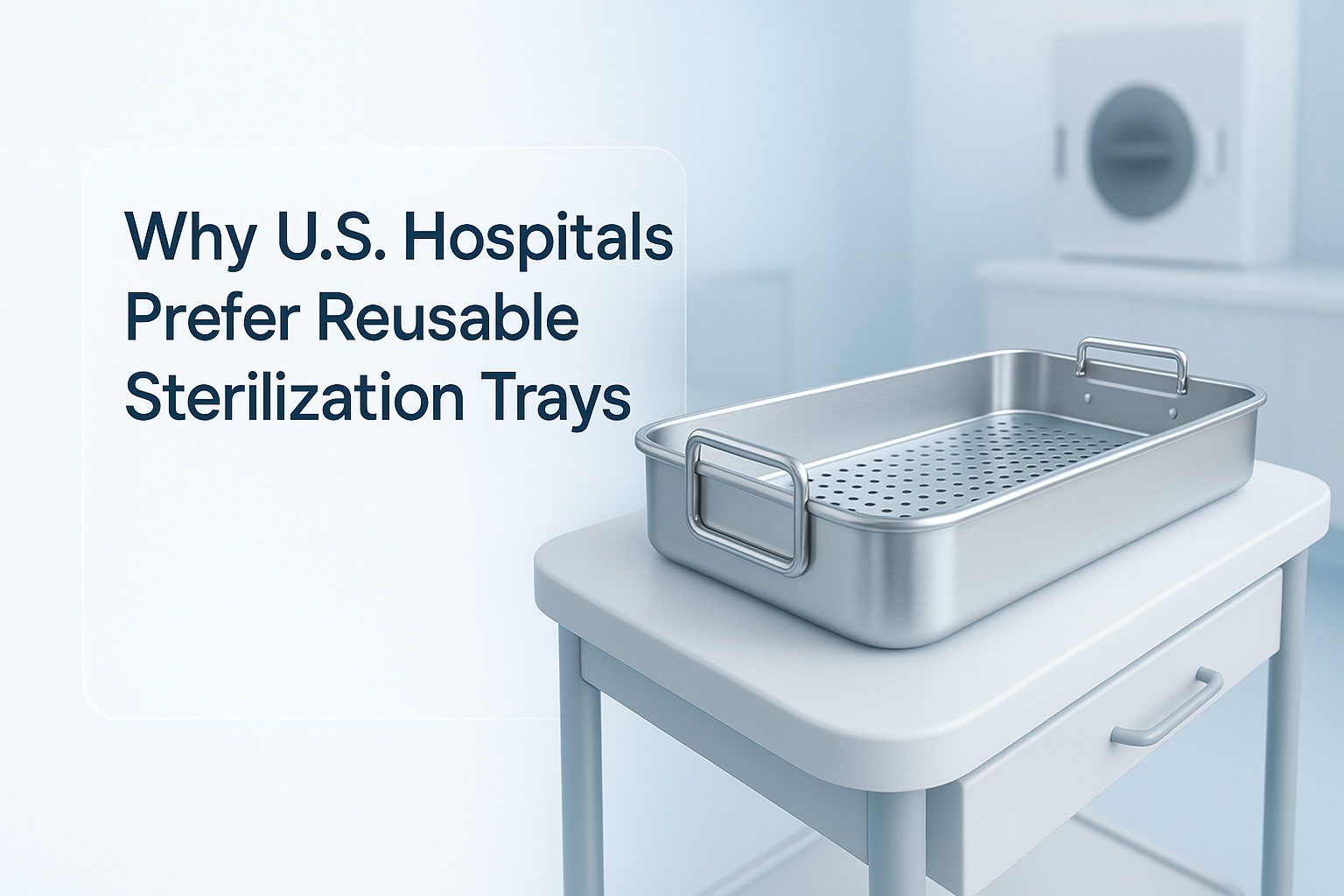
Reusable medical baskets are typically made from high-quality stainless steel or durable polymer and are designed to withstand repeated sterilization cycles.
Advantages:
- Long-term cost efficiency
- Durable and robust construction
- Reduced waste generation
Disadvantages:
- Higher initial investment
- Requires proper cleaning and maintenance
- Risk of cross-contamination if not handled correctly
What Are Single-Use Medical Baskets?
Single-use medical baskets are made from plastic or lightweight materials intended for one-time use and disposal after a single sterilization or procedure cycle.
Advantages:
- Minimal cleaning required
- Lower risk of cross-contamination
- Lightweight and easy to handle
Disadvantages:
- Higher recurring costs
- Significant environmental impact
- Less durable than reusable options
Environmental Impact Comparison
Reusable medical baskets help reduce landfill waste because they are designed for repeated use over many sterilization cycles. However, their sustainability impact also depends on the resources required for cleaning, including water, energy, and detergents. In contrast, single-use medical baskets significantly increase medical waste and rely heavily on plastic production, which contributes to environmental pollution. To make informed decisions, hospitals can assess both the carbon footprint and overall waste generation associated with each option and align their choice with long-term sustainability goals.
Cost Considerations for Hospitals
Reusable baskets typically require a higher initial investment, but their cost per use decreases over time as they are reused across multiple sterilization cycles. Single-use baskets, while cheaper upfront, lead to higher long-term expenses due to continuous repurchasing. When evaluated over time, reusable baskets often provide better cost efficiency for hospitals with high instrument processing volumes.
Recommendations for Sustainable CSSD Management
- Conduct a lifecycle assessment before choosing basket types.
- Consider hybrid systems – reusable baskets for high-volume procedures and single-use baskets for emergency or sensitive cases.
- Ensure proper sterilization protocols to maximize safety and longevity.
- Work with ISO-certified medical suppliers for reliable products.
Conclusion
Sustainability in CSSD is no longer an optional consideration; it is a critical part of modern hospital operations. The choice between reusable and single-use medical baskets directly influences environmental impact, operational costs, and patient safety. Reusable baskets support long-term sustainability and cost efficiency when proper cleaning and handling protocols are in place, while single-use baskets may offer short-term convenience but contribute significantly to medical waste and recurring expenses. By carefully evaluating workflow needs, sterilization capacity, and sustainability goals, hospitals can adopt basket solutions that ensure safe instrument processing while minimizing environmental impact and supporting responsible healthcare practices.






Leave a Reply