
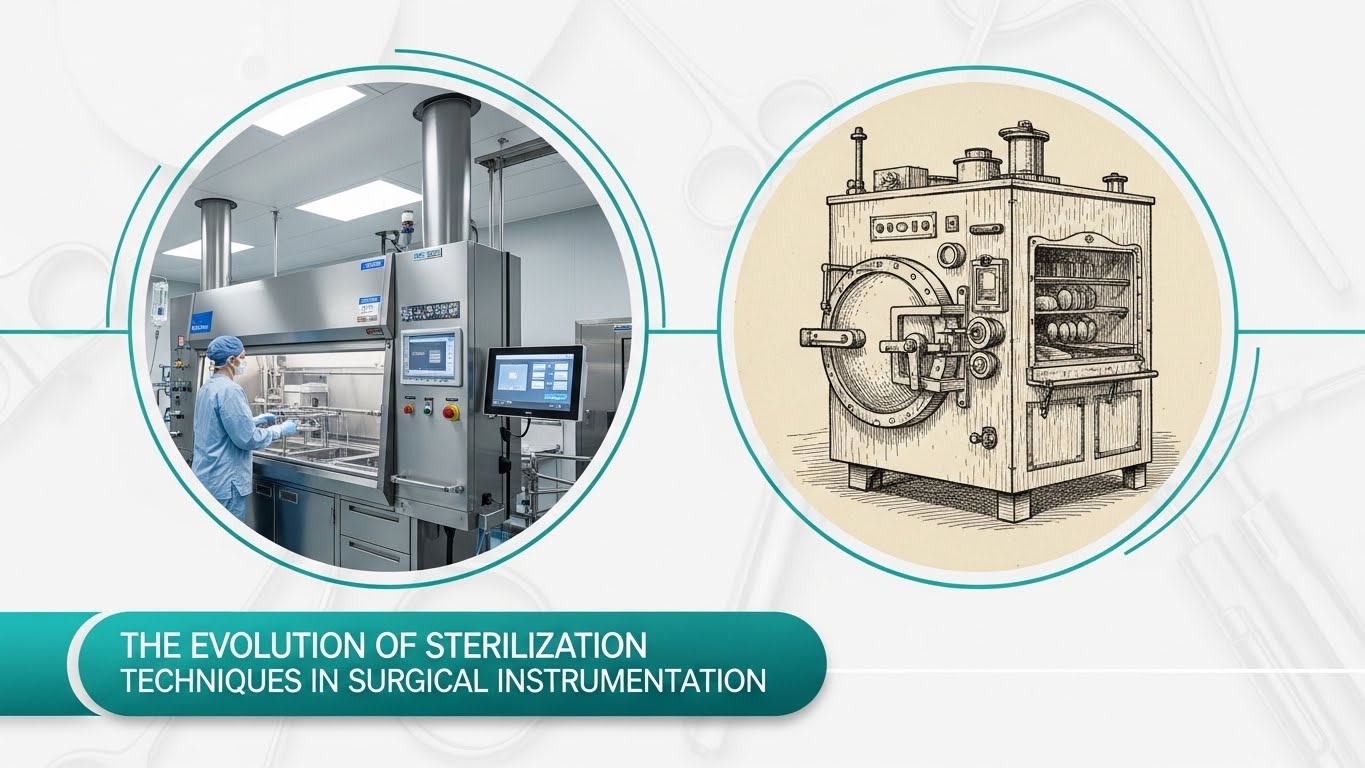
The Evolution of Sterilization in Surgical Instrumentation
Muhammad Danish2025-11-27T07:31:08+00:00Sterilization is one of the most important steps in healthcare. Every surgical instrument used in a hospital must be 100% clean and safe for the next patient. But the way we sterilize instruments today is very different from the way it was done years ago.
The evolution of sterilization in surgical instrumentation tells a story of learning, technology, and better patient care.
The Early Beginning: Simple Cleaning Methods
In the early days of medicine, sterilization was not very advanced. Doctors and nurses mainly used simple methods such as:
- Washing instruments with water
- Cleaning with cloth
- Heating tools over fire
- Boiling instruments in a pot
These methods removed dirt, but they did not fully kill all germs. Many patients still got infections, because harmful bacteria were not completely removed.
During this time, people did not fully understand how germs spread. So, even basic cleaning was seen as a big step forward. But it was not enough.
The Discovery of Germs Changes Everything
Medical professionals discovered an important fact about germs in the mid-1800s – germ infection can be caused by germs that cannot be seen. This discovery changed the whole world of medicine for doctors because they now understood that they needed to sterilize tools they used for patients. Better methods of sterilization developed as a result of this new understanding by the medical profession.
Medical professionals were able to start using heat to sterilize tools in a more precise manner compared to cleaning with hot water and other cleaning supplies as had previously been done. Instruments were heated to sanitize them at higher temperatures, which eliminated any remaining bacteria on the instruments. The development of sterilization methods is where scientific sterilization originated.
The Birth of the Autoclave: A Game Changer
One of the biggest turning points in the evolution of sterilization was the invention of the autoclave.
An autoclave uses:
- Steam
- High pressure
- High temperature
Together, these three destroy germs much faster and much more effectively.
Why the autoclave became the standard:
- Kills almost all types of bacteria and viruses
- Acts quickly
- Safe to use on stainless steel tools
- Allowed hospitals to sterilize multiple instruments using the same autoclave machine
Even today, the autoclave is still considered the most effective sterilization method worldwide. Moving beyond heat, a new method known as ‘low-temperature’ was developed for items that are sensitive to heat as well as moisture. Many medical tools fall into this category including:
- Plastic instruments
- Electrical medical devices
- Fiber optic devices
For these tools, hospitals started using low-temperature sterilization methods, such as:
✔ Ethylene Oxide (ETO) Gas
Kills germs at low heat and is safe for delicate tools.
✔ Hydrogen Peroxide Plasma Sterilization
Uses low heat and special technology to sterilize quickly.
✔ Chemical Sterilization
Uses chemical solutions to kill germs on instruments that cannot go in an autoclave.
These methods protect fragile instruments while still providing complete sterilization.
Washer-Disinfectors and Ultrasonic Cleaners Improve Workflow
As surgeries increased, hospitals needed faster and safer cleaning systems. This led to:
Washer-disinfectors
Machines that wash and disinfect instruments automatically.
Ultrasonic cleaners
They use sound waves to remove dirt from tiny areas that human hands cannot reach.
These systems make sterilization:
- Easier
- Faster
- More accurate
- More hygienic
They also reduce the workload on staff and improve patient safety.
Modern Sterilization: Smart Technology and ISO Standards
Today, sterilization is highly advanced. Hospitals follow strict rules, including ISO-certified medical equipment standards. These standards ensure that instruments, trays, and baskets meet global safety levels.
Modern sterilization systems include:
- Digital temperature control
- Automated cycle monitoring
- Tracking systems for each instrument
- High-quality stainless steel trays designed for efficiency
- Sensors that detect errors
Everything is designed to reduce risk and improve patient care.
Focus on Reusable Medical Baskets and Sustainability
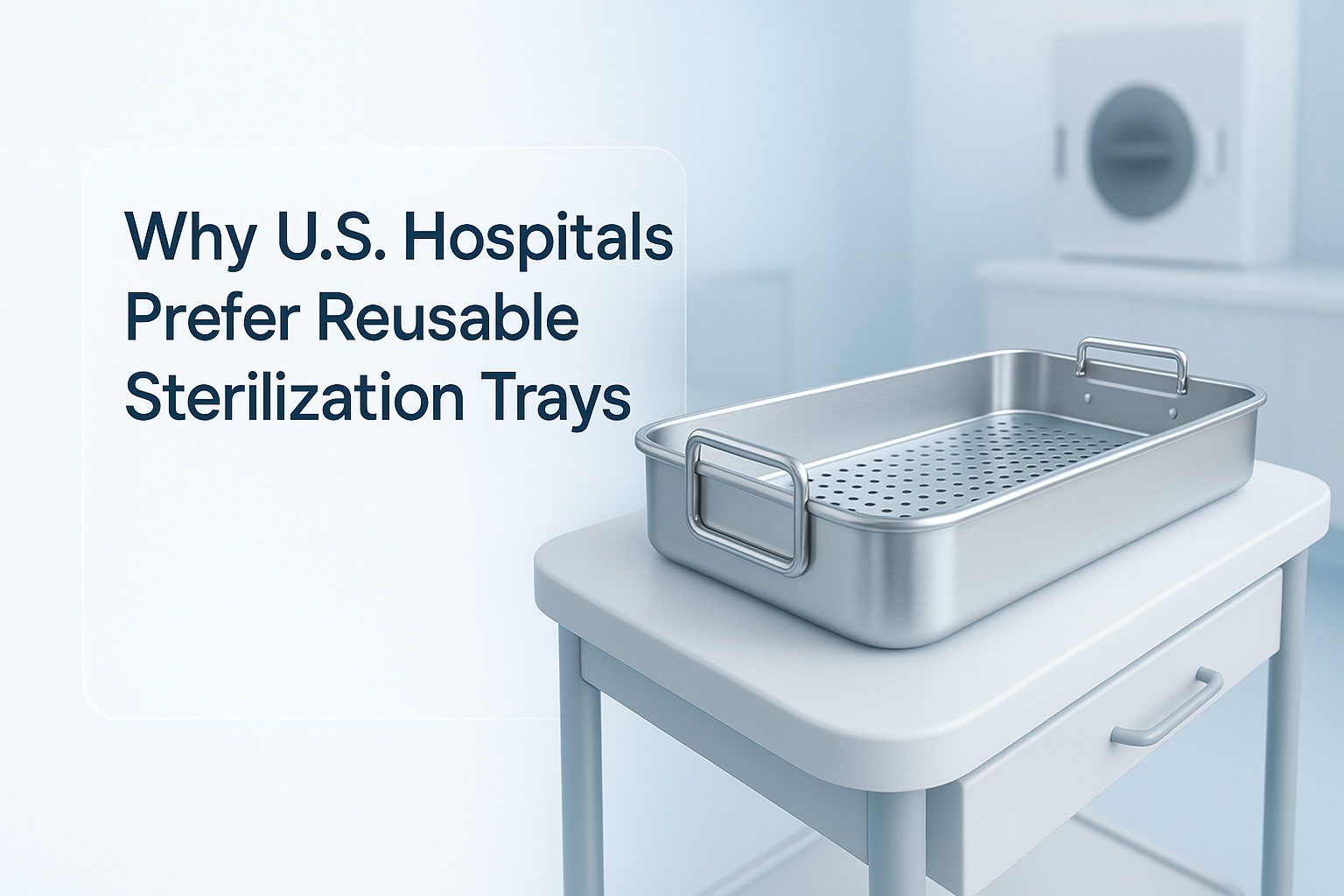
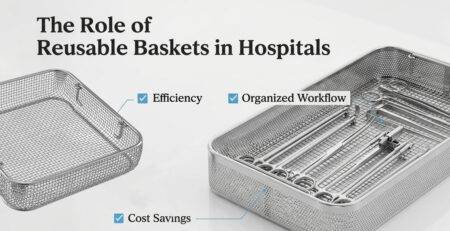
Another focus area in modern hospitals is environmental responsibility. Hospitals that use reusable metal trays and baskets will have a much longer lifespan than those made of disposable plastic. In addition to saving money and producing less waste, reusable baskets and trays can be reused hundreds of times without deteriorating, thus making them practical and sustainable.
The Future of Sterilization: Smarter and Faster
The development of smarter and faster sterilization techniques is continuing to evolve through the use of robotic and artificial intelligence technologies. These new technologies are already being piloted in a number of hospitals. These new technologies will provide increased safety and reduce human error while enhancing the efficiency of sterilization procedures. As we look towards the continuing evolution of medical technologies, we can anticipate continued advances in sterilization technologies.
Conclusion
The evolution of sterilization in surgical instrumentation shows how far healthcare has come.
From simple boiling to smart digital systems, every step has improved patient safety.
Today, hospitals use:
- Modern autoclaves
- ISO-certified medical trays
- Stainless steel surgical baskets
- Low-temperature sterilization for delicate tools
- Digital tracking and monitoring
These changes make surgeries safer and more reliable.
As technology continues to grow, sterilization will become even smarter, faster, and safer — helping hospitals provide the best care for every patient.



Leave a Reply