
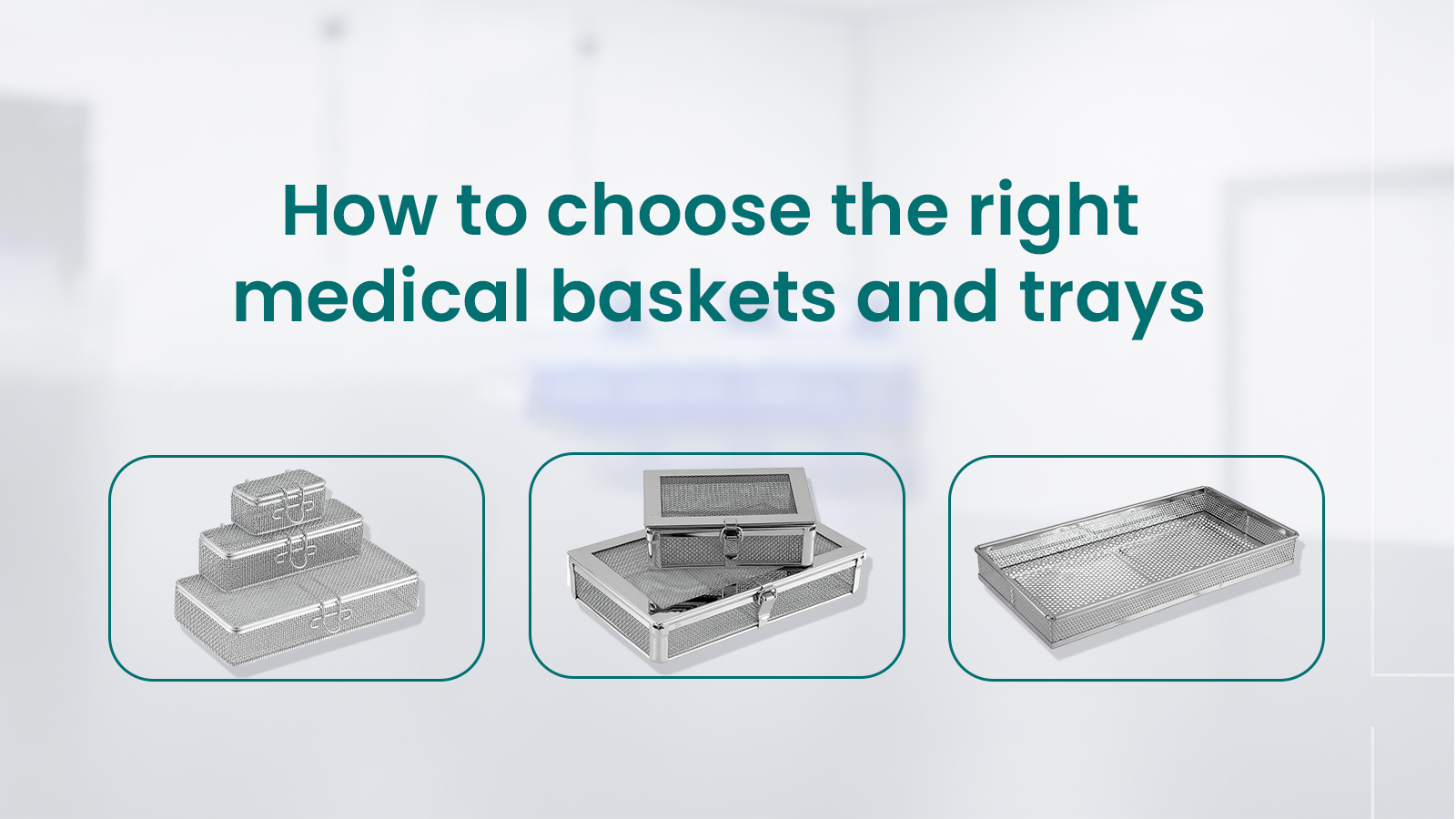
How to Choose the Right Medical Baskets and Trays?
Muhammad Danish2026-02-09T09:28:35+00:00Medical baskets and trays are a critical part of instrument handling in hospitals and clinics. They support proper cleaning, sterilization, storage, and transport of medical instruments. Choosing the right baskets and trays helps reduce damage, improve workflow, and support patient safety.
Why Medical Baskets and Trays Matter
Medical instruments must remain clean and sterile before use. Poor-quality trays or baskets can block sterilization, cause instrument damage, or create handling issues.
- The right baskets and trays help to:
- Support effective sterilization
- Protect instruments from movement and impact
- Improve organization and efficiency
- Extend instrument life
1. Material Quality
Material quality is one of the most important factors when selecting medical baskets and trays. Medical-grade stainless steel is widely preferred because it offers excellent durability, corrosion resistance, and compatibility with repeated sterilization cycles. High-quality materials maintain structural integrity even after long-term exposure to heat, moisture, and cleaning chemicals.
2. Compatibility with Sterilization Methods
Medical baskets and trays must be compatible with the sterilization systems used within the facility. Properly designed trays allow steam, gas, or plasma to circulate evenly around instruments, supporting complete sterilization and effective drying.
Key compatibility factors include:
- Proper steam or gas penetration
- Even airflow throughout the tray
- Suitability for autoclave sterilization
- Compatibility with low-temperature systems
- Support for effective drying cycles
3. Size and Load Capacity
The size and load capacity of medical baskets and trays directly affect sterilization efficiency and workflow safety. Trays that are too small can lead to overcrowding, while oversized trays may not fit correctly in sterilizers. Selecting the right size helps maintain balance during sterilization and reduces handling strain on staff.
4. Instrument Protection and Organization
Instrument protection is essential for maintaining performance and extending service life. Well-designed baskets and trays help keep instruments securely positioned during transport and sterilization.
Good design features include:
- Smooth, rounded edges
- Secure instrument placement
- Reduced movement during handling
- Optional silicone supports or dividers
- Organized layouts for easy identification
5. Ease of Cleaning
Ease of cleaning is critical for infection control and long-term hygiene. Trays and baskets with open designs and smooth surfaces allow for thorough washing and inspection. Designs that minimize tight corners and hidden areas help prevent residue buildup and support consistent cleaning results.
6. Compliance with International Standards
Medical baskets and trays should meet recognized international standards such as ISO, CE, and FDA requirements where applicable. Compliance confirms that products are suitable for medical use and have been tested for safety, durability, and performance.
Compliance helps ensure:
- Audit readiness
- Patient safety assurance
- Regulatory acceptance
- Consistent quality standards
- Trust in equipment performance
Quick Comparison Table: What to Look For
| Feature | Why It Matters |
|---|---|
| Stainless steel material | Provides durability and corrosion resistance |
| Sterilization compatibility | Ensures effective processing |
| Proper size | Supports balanced loading |
| Smooth design | Makes cleaning easier |
| Certification | Confirms healthcare compliance |
Conclusion
Choosing the right medical baskets and trays is an important decision for any healthcare facility. The correct selection supports effective sterilization, protects instruments, and improves daily workflow efficiency. By focusing on material quality, compatibility, design, and compliance, hospitals and clinics can make a reliable investment that supports both patient safety and long-term operational success.










Leave a Reply